
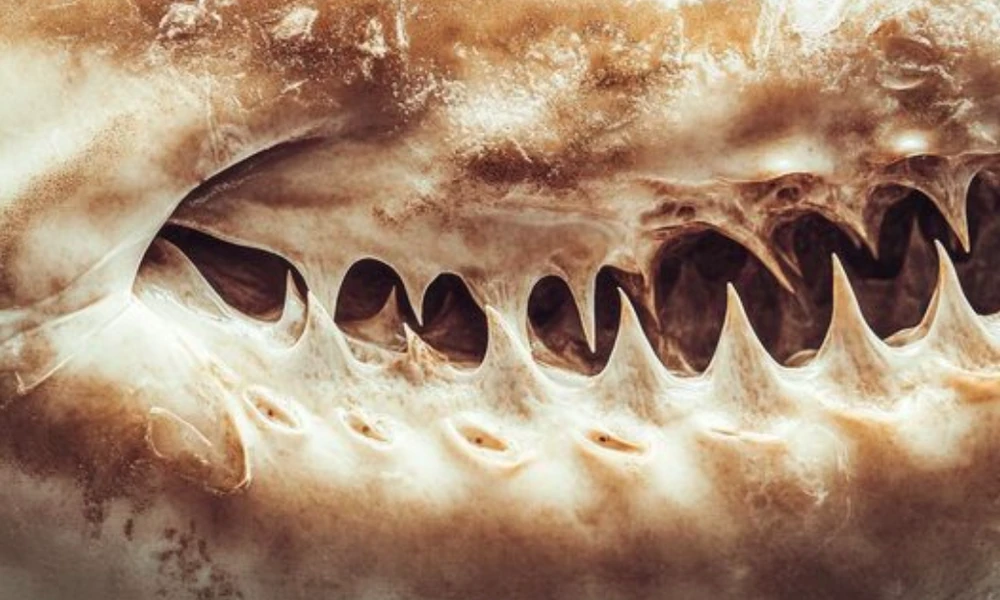
Acquiring a collection of prehistoric shark fossils is an exhilarating achievement for any enthusiast. Among the most coveted prizes in the world of paleontology are the specimens recovered from the unique phosphate-rich soils of the Bone Valley formation.
These fossils are famous for their extraordinary coloration, ranging from vibrant blues to rich, warm tans. However, because these ancient relics spent millions of years sealed in unique chemical environments, they require specialized care once exposed to air.
To protect your investment and maintain the pristine beauty of each Bone Valley Megalodon tooth, you must follow strict preservation protocols.
Initial Desalination and Deep Rinsing
The preservation process begins immediately after a specimen is extracted from its long-term resting place. If you discover a bone valley megalodon tooth in a riverbed or a damp creek, it will be saturated with groundwater containing minerals and soluble salts.
As the specimen dries, these internal salts crystallize, expanding within the microscopic pores of the enamel and causing irreversible structural cracking.
To prevent this, soak your fossils in distilled water for several weeks, changing the water every few days. This process safely leaches out harmful minerals and stabilizes the inner fossilized structure.
Controlled Drying Processes
Impatience is the enemy of fossil preservation. Once the desalination phase is complete, you must resist the temptation to accelerate the drying process using hair dryers, direct sunlight, or artificial heat sources.
Rapid environmental shifts cause uneven contraction between the dense root material and the glass-like enamel layer, leading to sudden fractures.
Instead, place each Bone Valley Megalodon tooth on a thick layer of paper towels inside a temperature-controlled room. Allow the specimens to air-dry slowly over several days to ensure that moisture evaporates uniformly.
Applying Structural Stabilizers
Even after thorough drying, ancient fossils can remain inherently brittle and susceptible to flaking. Applying a specialized liquid consolidant is highly recommended to reinforce the structural integrity of the tooth.
Conservators typically use a soluble polymer dissolved in acetone, which penetrates deep into the pores of the root and enamel. You can apply this mixture carefully using a soft brush or by completely submerging the specimen for a brief period.
Once the chemical solvent evaporates, it leaves behind a protective internal matrix that binds the fragile fossil layers together.
Maintaining Optimal Display Environments
The environment where you store your collection plays a massive role in its long-term survival. Extreme fluctuations in humidity can cause the organic and mineral components of the specimen to expand and contract at different rates.
Ideally, you should house your collection in a dedicated display case kept at a stable room temperature. Avoid placing the display near air conditioning vents, fireplaces, or drafty windows.
Keeping the ambient humidity level around fifty percent will effectively prevent the delicate enamel from becoming too dry or absorbing destructive excess moisture.
Protecting Fossils from Ultraviolet Light
While showing off the striking, unique colors of your collection is highly satisfying, exposure to direct sunlight can be incredibly detrimental. Ultraviolet radiation breaks down chemical compounds and can cause the brilliant olive, blue, or cream hues of a Bone Valley Megalodon tooth to fade over time.
To safeguard these irreplaceable colors, position your display cases away from natural windows. If you use internal lighting to illuminate your display shelves, select cool light-emitting diodes rather than incandescent bulbs, as they emit zero ultraviolet light and generate no radiant heat.
