
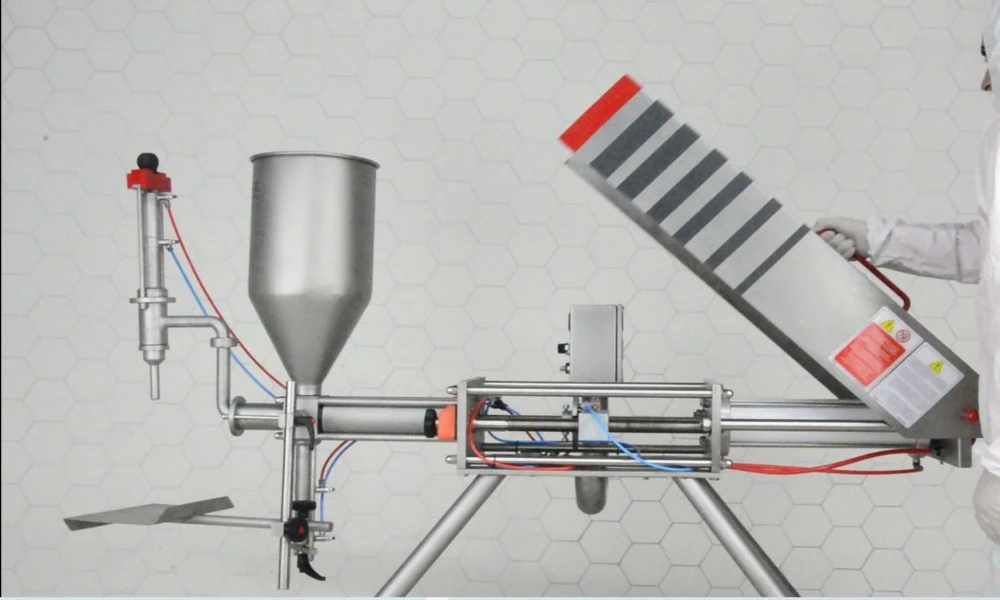
Growing manufacturers often treat automation as an all-or-nothing decision, assuming the only real choice is between hand-filling every bottle and investing in a fully automated line. That framing skips over a middle option that suits a large share of small and mid-sized producers far better. A semi-automatic liquid filling machine singapore buyer typically wants is one that removes the repetitive physical strain of manual filling without the cost and complexity of a fully automated system.
Where Semi-Automatic Sits Between Manual and Full Automation
A semi-automatic machine handles the dosing and dispensing precisely, usually through a pump, piston or gravity mechanism, while an operator still positions containers and starts each cycle. This keeps a person in the loop for quality checks and format changes, while removing the inconsistency that comes from manually judging fill level by eye. Many small producers find this hybrid arrangement fits their existing workflow far more naturally than a fully automated cell would.
Accuracy Gains Over Manual Filling
Hand-filling liquids inevitably produces variation from one container to the next, as fatigue and inconsistent pouring speed creep in over a shift. A semi-automatic unit delivers the same measured dose every cycle, cutting product giveaway from overfilling and reducing the underfilled containers that create compliance and customer complaints. Even a modest accuracy improvement compounds meaningfully once it is multiplied across a full day’s production run.
Handling Different Liquid Viscosities
Thin liquids such as water-based cleaners behave very differently under a filling head to thicker products like sauces or lotions, and a machine needs adjustable flow rate and dwell time to handle both without dripping or leaving air pockets. Manufacturers running a varied product range should confirm this adjustability before committing to a single mechanism. A quick nozzle or valve change is usually enough to move between viscosity ranges, provided the machine was specified with that flexibility in mind.
Labour Efficiency Without Full Automation
One operator running a semi-automatic filler can typically outpace several people hand-filling the same volume, freeing staff for packing, labelling or quality checks elsewhere on the line. In a labour market where skilled production staff are hard to source and retain, this efficiency gain often matters as much as the accuracy improvement. Redeploying staff to higher-value tasks also tends to improve morale compared with the repetitive strain of continuous manual pouring.
Footprint and Space Efficiency in Local Facilities
Given the cost of industrial floor space in Singapore, compact semi-automatic units that fit into tight production layouts without a dedicated automation cell offer a real advantage over larger fully automated lines. A compact tabletop filling unit can often be positioned directly beside existing capping or labelling stations, which keeps the whole process within a small footprint.
Flexibility for Multi-Product Manufacturers
Businesses producing several formulations or container sizes benefit from the quicker changeovers semi-automatic machines generally allow compared with fully automated lines built around a fixed format. Adjusting fill volume and nozzle height for a new product typically takes minutes rather than the retooling a dedicated automated line might require. This flexibility matters most for contract manufacturers and businesses still finalising their product range, where locking into one fixed format too early can prove costly.
Cost Compared to Fully Automated Lines
The capital outlay for a semi-automatic machine sits well below a fully automated filling and capping line, making it a realistic entry point for businesses scaling production without committing to the volumes needed to justify full automation. It also carries lower ongoing maintenance complexity, since there are fewer integrated moving parts to service. Lower complexity also tends to mean fewer specialist technicians are needed for day-to-day upkeep, which suits smaller operations without a dedicated engineering team.
When to Consider Upgrading to Full Automation
As volumes grow, the labour cost of even one operator per shift can eventually outweigh the price difference against a fully automated line, particularly for businesses running multiple shifts. Tracking output per labour hour over time gives a clearer signal for when that upgrade makes sense than guessing based on production targets alone. Reviewing this figure quarterly rather than annually tends to catch the crossover point before it becomes an obvious problem on the production floor.
Maintenance and Operator Training
Semi-automatic machines are generally simpler to maintain than fully automated systems, but operators still need proper training on dosing calibration and cleaning procedures to avoid drift in fill accuracy over time. Building a short standard operating procedure around start-up, calibration checks and shutdown keeps performance consistent across different shifts and staff. Written checklists also make it easier to onboard new staff quickly without relying entirely on informal handover from an experienced colleague.
Choosing the Right Machine for Your Production Stage
Match the machine to where your production actually sits today rather than where you expect it to be in three years, since overbuying automation before volumes justify it ties up capital that could fund other growth. For most small and mid-sized manufacturers weighing their options, a well-specified semi-automatic liquid filling machine singapore delivers the accuracy and labour savings that matter most at this stage, without the complexity of a system built for volumes you may not need yet.
